Preparing frontline clinics for the study
What site readiness looks like when training, connectivity, patient flow, and local context are designed together.

A study site is more than a room and a device. It is a coordinated system of people, routines, safeguards, and referral pathways. Our preparation begins with a walkthrough led by the people who know the clinic best.
The first conversation is practical. Where do patients arrive? Who explains the study? Which room offers enough privacy for consent and screening? How does the team manage a busy morning when several services share the same space? We trace the real path through the clinic before deciding where the study workflow should sit within it.
That walkthrough often reveals details that cannot be seen from a protocol alone. A power outlet may be farther from the examination area than expected. A consultation room may be available only at certain hours. A staff handover may happen during the period planned for participant visits. Each observation becomes a small design decision about equipment placement, scheduling, roles, or communication.

Laboratory checks before equipment moves into a clinic.
Connectivity is tested where the work will actually happen—not only near the reception desk or an office router. The IntelliBra workflow is designed to keep essential tasks available offline, but the team still needs to understand when data can synchronize, how that status is communicated, and what happens after an interruption. We rehearse those recovery steps until they feel ordinary rather than exceptional.
The equipment check is equally concrete. The team confirms that each component can be charged, cleaned, stored securely, and moved between rooms without disrupting care. Accessories are counted, device labels are matched to the site record, and the setup is repeated from a closed case rather than from an already prepared table. That simple reset shows whether the instructions are clear enough for the next shift to begin independently.
Training follows the same principle. Instead of separating the device from the surrounding care process, sessions move through complete scenarios: welcoming a participant, explaining consent, preparing the examination, documenting the result, cleaning the equipment, and closing the visit. Clinicians practice the expected path and the less predictable moments—a delayed appointment, an incomplete record, or a temporary loss of connectivity.
Clinical coordination in practice
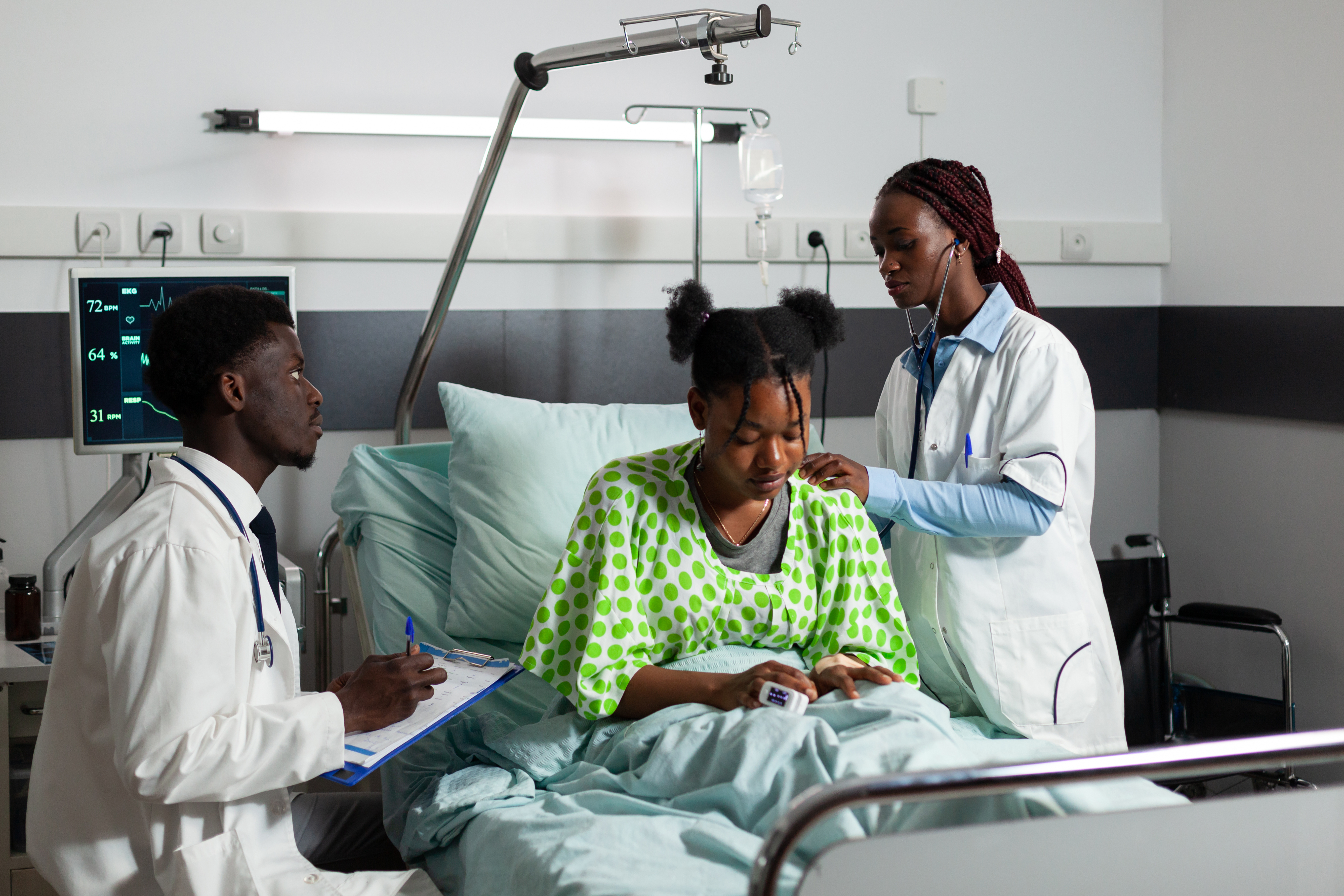
Training, patient flow, and low-connectivity workflows are reviewed together before the first participant arrives.
Clear roles matter as much as technical competence. A site may have one person welcoming participants, another conducting the examination, and a senior clinician reviewing findings. The readiness session makes every handoff visible: who confirms consent, who checks completeness, who locks the device at the end of the day, and who responds when a question falls outside the planned workflow. Naming those responsibilities reduces hesitation when the clinic is busy.
Participant experience is reviewed with equal care. Technical readiness means little if a woman does not know what will happen, how long the visit may take, or whom she can ask for help. The site team reviews the language used at each step, checks that privacy can be maintained, and confirms that choosing not to participate—or deciding to withdraw—does not affect access to routine care.
Data handling is rehearsed as part of care rather than treated as an administrative task for later. The team checks how study codes are assigned, where consent records are kept, who can access the tablet, and how a correction is documented without obscuring the original entry. No names or national identity numbers are entered into the research dataset. These safeguards are reviewed aloud so that privacy remains a shared clinical responsibility.
Referral planning is another essential part of readiness. The study does not end when a screening record is completed. Before enrollment begins, the site confirms who reviews findings, how a participant is contacted, which services can receive a referral, and how urgent cases are escalated. Clear ownership prevents a result from becoming an unanswered question between teams.
A final simulation brings the pieces together. One team member plays the participant while the others complete the visit from arrival to departure. Observers record pauses, repeated questions, unclear prompts, and moments when staff leave the room to find information. The group then debriefs without assigning blame. The purpose is to improve the system around the team, not to reward a polished performance during inspection.
At the end of the preparation visit, the clinic and study teams review the same readiness record. Open items receive a named owner and a realistic date. Some can be resolved immediately; others require a follow-up call, a revised schedule, or a second simulation. Readiness is not treated as a single inspection or a pass–fail moment. It is a shared process of removing uncertainty before the first participant arrives.
This work is deliberately detailed because reliable research depends on repeatable care. When roles are understood, contingencies are practiced, and referral paths are visible, clinicians can focus on the person in front of them. That is the standard we want every participating site to reach—and the reason readiness begins by listening closely to each clinic.
“Readiness is a shared confidence: the team knows what to do, the participant knows what to expect, and the referral path is clear.”